One idea has taken over the job search lately: let an AI apply to hundreds or thousands of openings for you while you do something else. It sounds like the perfect fix for a saturated market — more shots on goal, less of your time.
The problem shows up the moment you read reviews from people who actually paid for it. The pattern that keeps repeating isn't "it saved me time". It's automated form-filling that gets basic fields wrong, applications that read as generic the second a recruiter opens them, and a result that isn't more interviews — just more rejections, faster.
- Send your CV to hundreds of listings a day
- One CV, recycled for every role
- Zero time spent per application
- The right CV for each specific role
- Applying to the companies where you actually fit
- Interview answers you built before you're asked
What really happens when you "apply automatically"
These tools promise to save you time by sending your CV to hundreds of listings a day across different platforms. In practice, users have reported that the automated form-filling fails often — in some cases on most applications — leaving basic fields blank or filled in wrong, and forcing the person to review and fix every submission by hand. In other words: the time you were supposed to save ends up going into cleaning up after the bot.
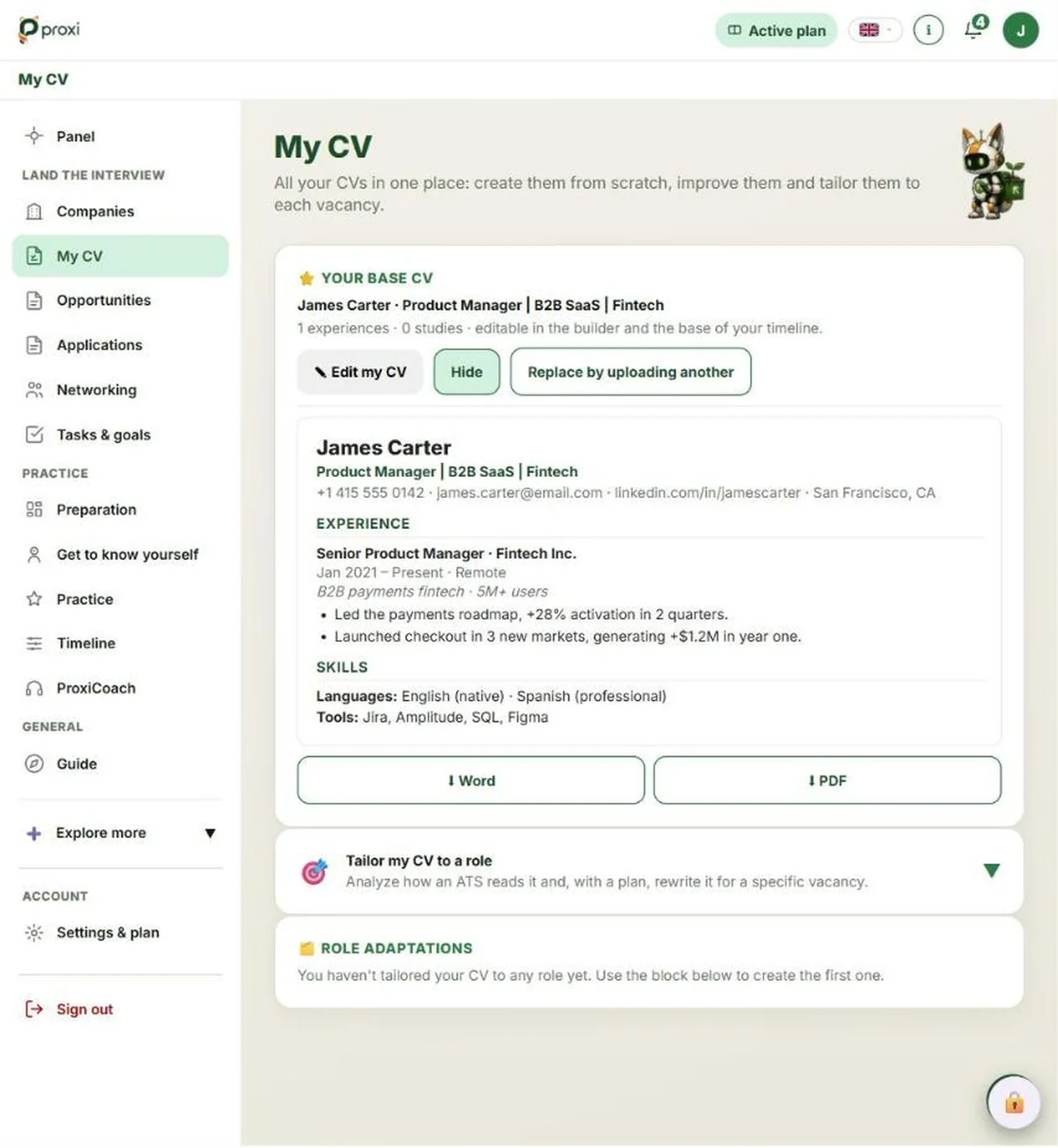
We don't believe in automating the sending. We believe in automating the preparation. ProxiCoach uses AI to tailor your CV to the specific role you're going for — analysing the posting, keeping what an ATS needs to see, and rewriting the emphasis without inventing anything.

"I had the experience but I didn't know how to show it. They helped me put numbers and context around my achievements."
Volume doesn't solve the real problem
When a popular role gets posted, hundreds of people can apply within the first hour. The bottleneck isn't how many times you apply — it's how well you fit, and that gets decided by an ATS filter or by a person scanning your profile in seconds. Applying to a thousand jobs with the same generic CV doesn't change that equation. It just multiplies your chances of being rejected a thousand times instead of ten.
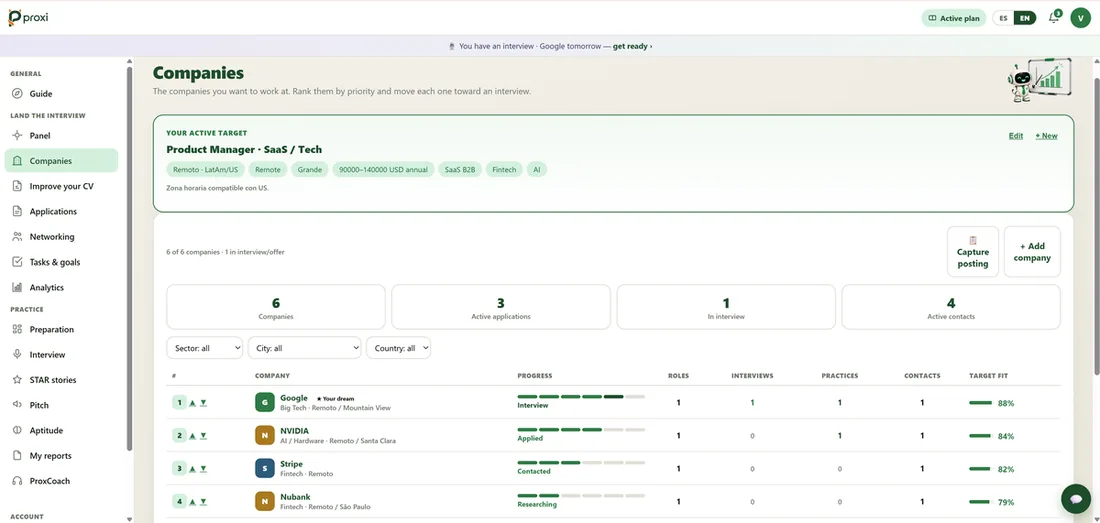
Before you send anything, your Companies board shows a Target Fit score for every company you're tracking — built from the role you're after, not a generic match score. It's how you spend your energy on the ten applications worth the effort instead of the thousand that aren't.
Recruiters are learning to spot it
Another complaint that keeps coming up: applications generated automatically, without real personalisation, are becoming recognisable to the people receiving them. When that happens, the effect is the opposite of what you wanted — instead of standing out, your application reads as one more in a pile of mass submissions.
The goal isn't for your application to look like AI produced it at speed. It's for it to look like you thought about it — even though AI helped you build it, in a fraction of the time it would take you alone.
And if something goes wrong, good luck getting your money back
One of the most repeated patterns in reviews of these tools isn't just that the product fails — it's how hard it becomes to get a refund afterwards. Users describe unclear cancellation policies, subscriptions that renew without warning, and support that goes quiet the moment a complaint comes in.
You start free, no card required. We'd rather you decide to pay because you've already seen the value, not because we tangled you in a subscription you can't get out of.
The question isn't how many times you apply — it's where
Applying to a thousand jobs rests on a flawed assumption: that a job is a job, and the more you send, the sooner one lands. But not every job is the job you want. You can end your search with an offer that doesn't actually fit you, and six months later find yourself starting the exhausting process all over again.
Here's something almost nobody tells you when you're job hunting: most people don't fail for lack of applications. They fail because they never stopped to answer three basic questions before they started sending CVs.
1. Where do I actually want to go?
Not "what job can I get", but what kind of role makes sense for where you are professionally and where you want to be in three years. Without that, every application is a shot in the dark.
2. Which companies actually fit me?
Not the ones that are hiring, but the ones where your profile, your way of working and your priorities make sense. Applying to a company whose culture or structure doesn't suit you is wasted time even if they hire you.
3. What version of myself do I need to show to get there?
Your experience can be told in many ways, and not all of them work equally well for every role. The same track record can read as scattered or as strategic depending on how you order it.
Volume doesn't solve any of that. Strategy does.
Before we talk about CVs, we work with you on your profile and your goal: what you're good at, what sets you apart, and which kinds of companies and roles are worth aiming for. Only then does preparing an application make sense — because now you know who it's for and why.
What applying "with focus" actually means
"Quality over quantity" sounds nice, but in practice it means very specific things that most people don't do — not because they don't want to, but because they don't know how or don't have the time:
- Read the job ad the way a recruiter would. Every listing has requirements that are mandatory and others that are nice-to-have, and wording that reveals what problem the company is trying to solve by hiring.
- Translate your experience into the language of that role. Not inventing anything — reordering. What appears in your CV as just another responsibility might be exactly the achievement that company needs to see first.
- Know what you're going to say before you're asked. Interviews don't improvise well. The hard questions have answers you build calmly in advance, not on the spot with your nerves running.
- Understand how you come across, not just what you say. An interview evaluates content, but also confidence, clarity and consistency.
Doing all of that properly, for every application that matters, takes work. That's why most people don't — and why the ones who do stand out.
There's human judgement behind the AI
There's an important difference between a tool that generates text and one that knows which text works. We didn't start from the technology — we started from understanding how selection processes actually run: what a recruiter looks at in the first few seconds, why a solid profile sometimes gets cut, what makes one interview answer build confidence and another raise doubts.
We're a team specialised in selection processes and human behaviour. AI is what lets us put that knowledge at your disposal instantly, as many times as you need it. But the judgement behind each recommendation didn't come from a model — it came from people who have sat on the other side of the table.
What we can guarantee
Let's be clear: we can't promise you a job offer. Nobody honest can, because that decision doesn't depend on any tool or any coach — it depends on the company hiring, on who else is applying, and on factors nobody controls.
You'll come out of this process knowing yourself better as a professional: your real value in the market, where it makes sense to apply and where you're wasting your time, how to present your experience for each type of role, and what you want to convey walking into an interview — not improvising. That serves you for this search, and for every one you'll run over the rest of your career.
We don't multiply your chances of landing any job. We multiply your chances of getting where you actually want to go.
Want to prepare your next application properly?
Tailor your CV to the role you actually want, and practise the interview with real feedback — free to start, no card.
Start free with ProxiCoach →150+ professionals prepared · 87% pass rate
So what does work?
There's no shortcut that replaces being properly prepared for a selection process. What does help:
- Being clear on where you want to go before you start applying
- Choosing the right companies and roles to aim for, instead of applying to everything that shows up
- Tailoring your CV and cover letter to every role you genuinely care about
- Practising interviews with specific feedback on your answers, not generic advice
- Understanding what each role is looking for — and whether you actually want it — before you apply, not after you're rejected
Job hunting is exhausting enough on its own. The temptation to automate all of it is understandable — but automating volume without protecting focus just gets you more rejections, faster, and sometimes a job you never wanted in the first place.
Ten applications made with judgement are worth more than a thousand sent blind. Not because it sounds good, but because they're the only ones anyone will read properly.